
Affiliate disclosure: This article may contain affiliate links. If you follow a link and make a purchase, the publisher may earn a commission at no extra cost to you.
Alpina referral guide: what to compare before you choose
Alpina presents a service model built around comparing insurance providers, arranging cover online, offering personal advice and maintaining local access. Its own website also describes a broader range of help with fixed costs and financial matters for private and business customers. That can make it worth adding to a shortlist, but it does not remove the need to compare the actual quote, policy terms and adviser arrangement with other routes.
Alpina at a glance
AI-generated generic editorial illustration — not a retailer product photo and does not depict the reviewed product or service. Help readers compare practical options without depicting a product.
 Alpina describes itself as a provider for people and businesses looking for financial security, with a package of related services and products offered in one place. On its homepage, insurance is central to that proposition, but the stated scope is wider: it says it can help with fixed costs and financial matters as well.
For a reader comparing options, the important point is the service model rather than a promise that one provider will be right for everyone. Alpina says it compares multiple insurers and aims to provide independent advice. It also presents a choice between arranging insurance yourself and receiving personal advice. That combination may appeal if you would rather begin with a comparison-led conversation than approach one insurer alone.
The same site positions Alpina as available both online and through nearby branches. In practical terms, that creates several possible ways to engage: a quick online arrangement for a straightforward need, a conversation with an adviser when questions arise, or local contact where that matters to you.
Treat this as a starting point for comparison, not a conclusion about price, cover or service quality. The supplied information establishes the broad model Alpina describes; it does not establish whether its selection of insurers is the whole market, whether a particular policy is the cheapest, or whether a given policy is suitable for your needs.
It can therefore help to separate the features of the route from the result of an individual quote. A service may offer a useful starting point because it combines comparison and several contact methods, while the eventual policy still needs to be judged on its own terms. Consider which of those features matters most to you before requesting information: a wider initial comparison, the ability to seek personal advice, online self-service, or access to a nearby branch. That makes the first conversation more focused and reduces the risk of treating a general description of the business as a guarantee about an individual outcome.
Shop Alpina referral guide: what to compare before you choose →
Potential strengths for comparison shoppers
AI-generated generic editorial illustration — not a retailer product photo and does not depict the reviewed product or service. Clarify the comparison-shopping value proposition without implying independently verified savings.
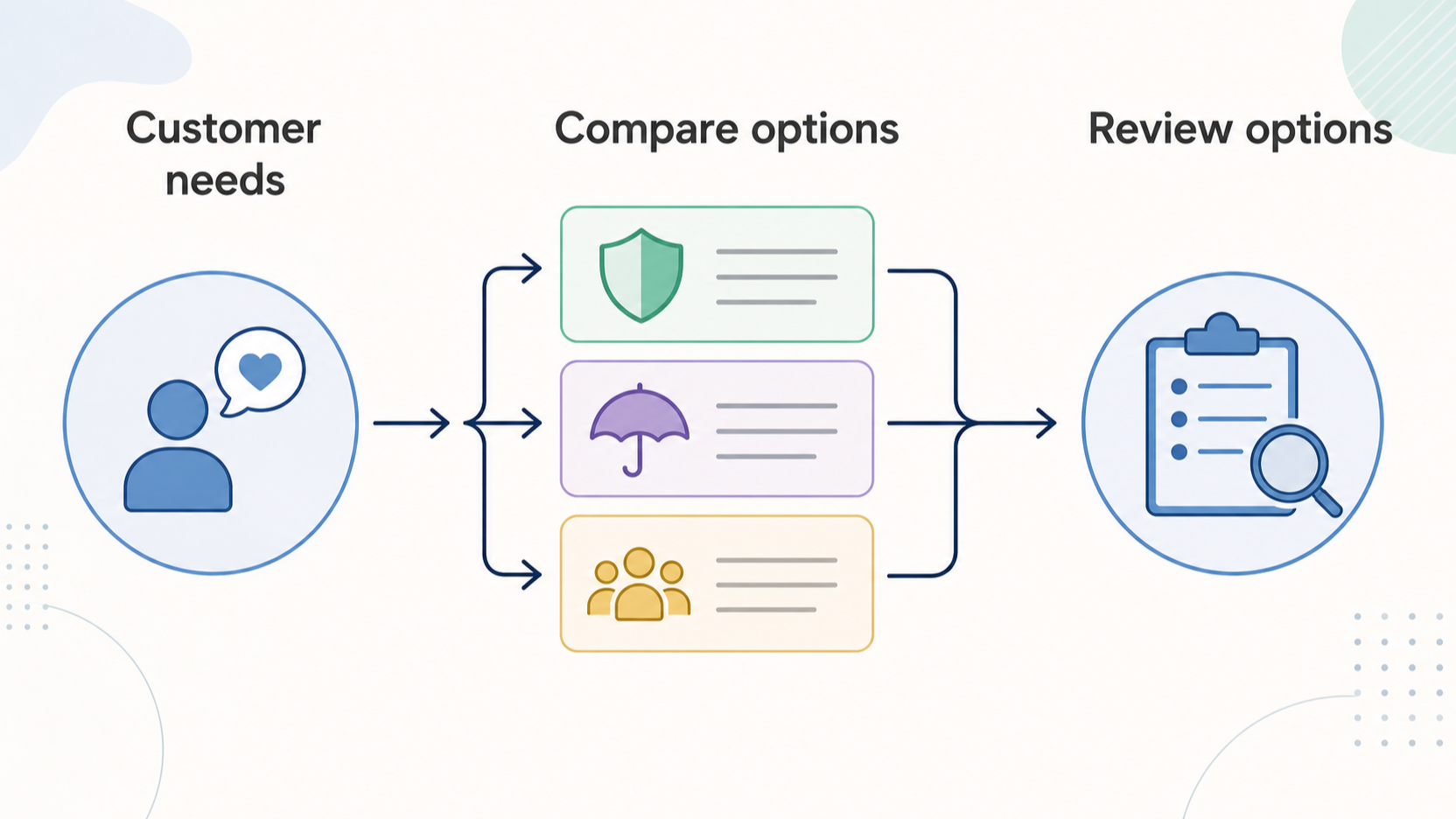 The clearest potential strength is Alpina’s stated use of multiple insurers. Its homepage says it compares several providers for customers and displays a number of insurer names. For someone who does not want to obtain separate quotations from every insurer individually, that may be a convenient way to start narrowing the field.
There is a difference, however, between a multi-provider comparison and a guaranteed best-market outcome. Alpina’s public statement supports the former: it says it compares different insurers. It does not, from the evidence supplied here, show the full insurer panel for every insurance type, the criteria used to rank options, or whether every relevant provider is available. Ask which insurers are considered for the cover you need and whether any important options sit outside that comparison.
A second possible advantage is flexibility in how you arrange cover. Alpina says customers can organise insurance online and also receive personal advice. This may suit readers who want a straightforward digital route for one need but value being able to ask questions for another. It also says it is available locally through branches as well as online, which may be relevant if face-to-face contact is important to you.
The wider “under one roof” proposition can be useful too. Alpina says it helps with insurance, fixed costs and financial matters. If you are reviewing several household or business needs at once, one contact point could make the process easier to manage. The benefit depends on what you need help with and how the specific services are delivered, so it is worth confirming the scope before treating it as a reason to consolidate everything.
In short, Alpina may be a sensible shortlist candidate where comparison, advice and channel choice matter. The potential convenience is real as a stated service feature, while the value of any eventual recommendation still needs to be tested against the quote and your alternatives.
A useful way to test that convenience is to prepare the same short set of questions for every route you consider. Ask who is included in the comparison, whether the available options match your needs, and how you will receive explanations or follow-up support. This does not turn the service into a universal answer, but it can show whether its stated combination of comparison and contact options saves you time without leaving important questions unanswered. The answer may differ by product and by the level of support you want.
Limits to keep in mind
AI-generated generic editorial illustration — not a retailer product photo and does not depict the reviewed product or service. Help readers distinguish stated benefits from details requiring a quote or direct confirmation.
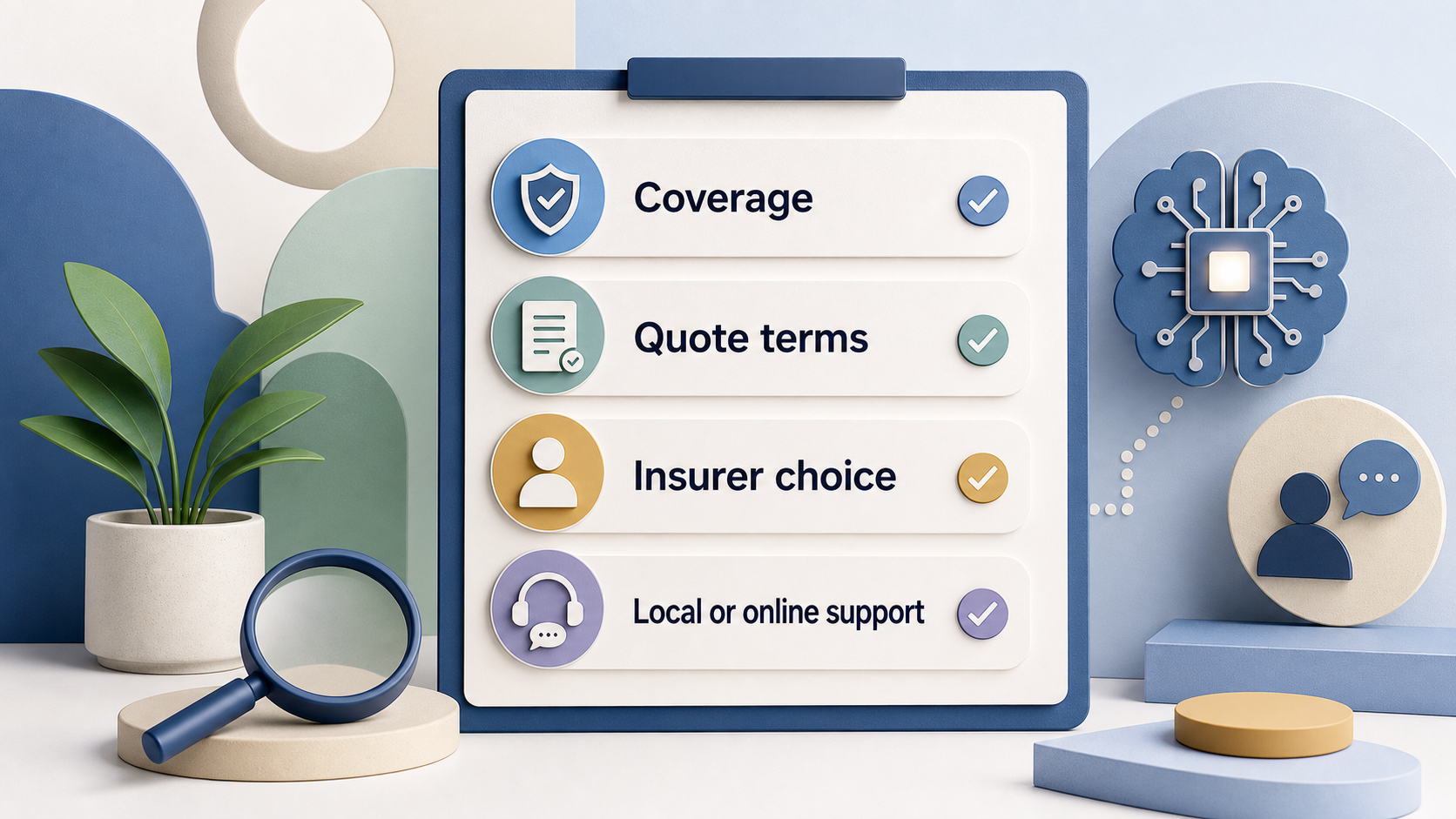 The supplied official evidence is useful but limited. It confirms that Alpina says it compares multiple insurers, offers online and personal routes, serves private and business customers, and has local branches. It does not independently establish whole-market coverage, premium competitiveness, policy suitability, claims performance or the quality of an individual adviser interaction.
Start by asking what is being compared. A list of several insurers does not by itself tell you whether all relevant insurers are available for your product, postcode, risk profile or business type. Request clarity on the insurer panel and on whether the recommendation is based only on that panel. If you are already considering a particular insurer, ask whether it can be included in the comparison.
Then read the proposed cover rather than relying on a headline premium. Check insured amounts, excesses, exclusions, optional add-ons, renewal terms, cancellation conditions and any assumptions used in the quotation. A lower initial price can be less useful if important cover is absent, restricted or priced differently later. Where the policy matters financially, compare the documents line by line with at least one direct or alternative quotation.
Advice format deserves a separate check. Alpina presents personal advice and local access as part of its model, but the evidence does not specify how much advice is included for each product, how appointments work, or which services are online-only. Ask whether the contact is advisory, administrative or both, and who will support you if you need to make a claim or change the policy.
Finally, do not assume that a broad service range will be the best fit. Some readers prefer one contact point; others prefer direct control with a single insurer or a specialist adviser for a complex need. The useful question is whether the route gives you enough choice, explanation and ongoing support for the decision in front of you.
Keep a written record of the answers you receive and of the documents used for the comparison. This is especially helpful when two quotes have similar prices but differ in limits, exclusions or service arrangements. If an answer remains unclear, pause before making the decision and ask for the relevant policy wording or a plain-language explanation. The aim is not to assume a weakness in any route; it is to make sure the available evidence and the proposed policy are sufficient for your own decision.
Alpina and practical alternatives
AI-generated generic editorial illustration — not a retailer product photo and does not depict the reviewed product or service. Frame Alpina against practical ways to arrange insurance.
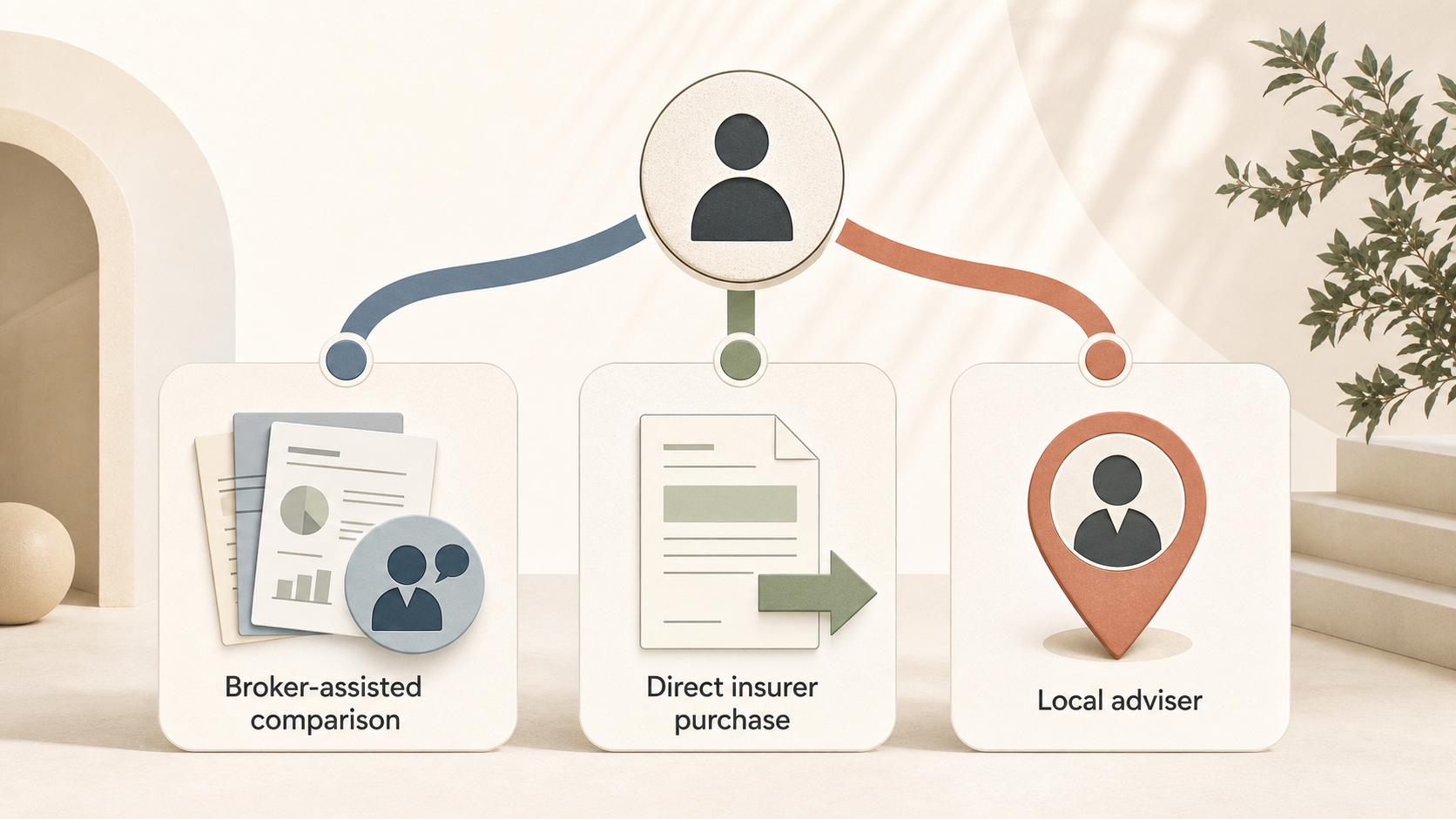 There are three practical routes to compare. The first is a comparison-led intermediary or adviser route such as the model Alpina describes. The second is buying directly from an insurer. The third is consulting another adviser, broker or specialist route. None is automatically better; each changes how you balance breadth, convenience, advice and control.
With Alpina’s stated model, the attraction is that multiple insurers may be considered while you retain options for online arrangement, personal advice and local contact. This can be useful when you want help navigating alternatives but do not want to approach each insurer separately. Before relying on that route, establish which insurers are in scope for the exact policy and how the recommendation is formed.
Buying direct from an insurer can suit someone who already knows which provider they want to evaluate, prefers to deal with the policy issuer directly, or wants to compare a specific insurer’s terms without an intermediary. It may also be an efficient route for a simple requirement. The trade-off is that you will normally need to make the cross-insurer comparison yourself, and a single insurer’s quote cannot show how its terms stack up against others.
Another adviser or broker route may make sense when the cover is unusual, the risk is complex, or you want a different style of support. A specialist may focus more closely on a particular insurance area, while a different adviser may have another insurer panel or process. In return, you should ask the same core questions: which providers are considered, what is included in the service, how is advice delivered and what support is available after purchase.
Use a consistent comparison sheet whichever route you choose. Record the insurer or insurers considered, premium and payment structure, cover limits, excesses, exclusions, add-ons, policy documents, renewal conditions and claims-contact process. Also record the practical experience you want: fully online, adviser-led, local, or a blend of these.
Alpina’s own presentation makes it a reasonable option to include where you value a multi-provider, online-and-local model. A direct insurer or another adviser remains a useful benchmark because it helps you test whether the proposed cover, price and support match your priorities rather than simply accepting the first workable route.
The comparison does not need to be complicated. Start with the same insurance need, use the same information when requesting each quote, and note where a result cannot be compared directly. A route that is convenient for a simple purchase may be less suitable when you need detailed explanations, while a more involved route may be worthwhile for a complex decision. Comparing both the policy terms and the experience of obtaining support gives you a more balanced basis for choosing.
Shop Alpina referral guide: what to compare before you choose →
How to decide if Alpina fits
Begin with the reason you are looking for cover. If your priority is seeing several insurer options through one point of contact, Alpina’s stated comparison approach may be relevant. If you already have a preferred insurer or want complete control over every quotation, direct purchase may be a stronger benchmark. If your need is specialised, compare whether Alpina’s available options and advice scope cover that need before deciding.
Next, ask for the practical details behind the comparison. Request the insurers considered for your case and whether the panel changes by product or customer profile. Ask what information drove the recommendation and whether there are comparable policies you should review. This is the step that turns a broad claim of comparison into something you can evaluate for your own circumstances.
Compare the policy, not only the price. Put the quote beside one or more alternatives and check cover limits, excesses, exclusions, optional protections and renewal conditions. Make sure the payment schedule is clear and that you understand what would happen if your circumstances change. If you are uncertain about a term, ask for an explanation before purchasing rather than assuming similar product names provide similar protection.
Decide what kind of support you need. Alpina says it offers online arrangement, personal advice and nearby branches. Consider whether you want a quick digital process, the ability to speak to someone, local contact, or a combination. Confirm how that support applies to the particular product, including who will be your contact after the policy starts and how claims assistance works.
Finally, make the decision against your own priorities. A good fit is not necessarily the lowest quoted price or the broadest-sounding service range. It is the route that gives you sufficiently relevant insurer choice, understandable cover, an acceptable premium structure and the level of advice or contact you want. Keep your notes and policy documents so you can revisit the decision at renewal.
Before accepting a quote, use a short final check. Confirm that the product being compared is the product you intend to buy, that any optional elements are clearly identified, and that you know which questions still require an answer. Decide whether the explanation you received is sufficient for the importance of the decision. This framework can be applied equally to Alpina, a direct insurer, or another adviser, so the choice stays grounded in the policy and the support you need rather than in a broad service description.
The next step
Alpina is worth considering if a comparison-led insurance route, online convenience, personal advice, local access and broader financial-services support are useful to you. Its official information supports those features as part of the service it describes, but it does not prove that a particular policy will be best for every reader.
A sensible next step is to request or review a quote, ask which insurers are being compared for your situation, and place the resulting policy terms beside at least one practical alternative. Check the cover, exclusions, premium structure, advice scope and claims-support arrangements before you commit.
Use the route that gives you the clearest understanding of the policy and the level of support you want. That may be Alpina, a direct insurer or another advisory route; the evidence here supports putting Alpina on the shortlist, not treating it as a universal recommendation.
If you proceed, take the time to compare like with like and retain the quote, policy documents and notes from your conversations. A decision can be revisited when circumstances change or at renewal, and a documented comparison makes that review easier. The practical objective is a policy you understand and a route that matches the level of contact, explanation and choice you want.
Sources
Editorial information: About our editorial team · Read our editorial policy · Read our affiliate disclosure.
Shop Alpina referral guide: what to compare before you choose →